 By Admin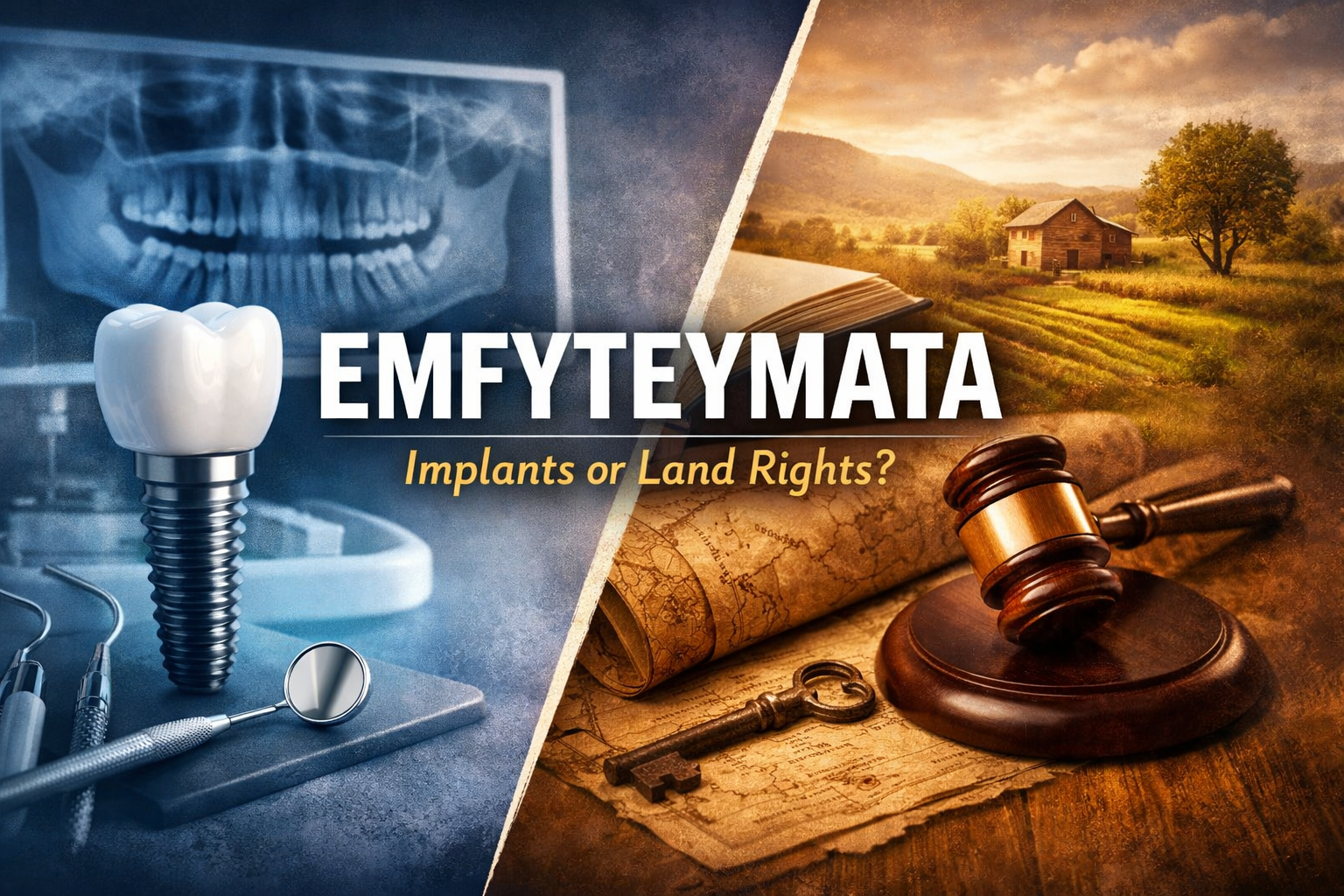
Search for emfyteymata and, honestly, the internet gets a little messy. Some pages use it in a dental context, especially as a transliterated Greek word connected to dental implants. Other pages connect it to an old legal idea related to emphyteusis, a long-term right to use and improve land. So the word looks simple at first… but it actually opens two very different doors.
The safest way to understand emfyteymata is this: online, it often appears as a spelling or transliteration tied to implants, especially on Greek dental websites, while the more formal legal references use related terms like emphyteusis or emphyteumata for property law. That split is exactly why the keyword confuses so many readers. And yes, it can be frustrating when one search gives you teeth, and the next gives you Roman law.
A quick look at both meanings
The comparison below reflects the two main patterns that showed up in reliable and exact-match search results.
| Context | What “emfyteymata” points to | Simple meaning |
|---|---|---|
| Dental use | Greek-style spelling related to implants | Artificial tooth roots placed in the jaw |
| Legal use | Related to emphyteusis / emphyteumata | A long-term right to use and improve someone else’s land |
| Search confusion | Mixed spelling across blogs and websites | Same-looking keyword, different meanings |
The dental meaning of emfyteymata
On dental websites, the idea is much more straightforward. Dental implants are artificial supports placed in the jaw where natural teeth are missing. Several clinic pages describe them as titanium structures that act like tooth roots and help support crowns or other restorations. In simple words, they’re there to bring back function, stability, and a more natural smile.
Why do people care about them so much? Because they solve very real problems. Missing teeth don’t just affect appearance. They can change chewing, speech, comfort, and confidence too. And that’s why implant dentistry is usually presented as a long-term restoration option rather than just a cosmetic fix.
A few key points make the dental meaning easy to spot:
- The page talks about teeth, jawbone, titanium, crowns, or healing
- It often describes implants as artificial roots
- The focus is usually on restoring missing teeth
- You may also see discussion of All-on-4 or full-mouth restoration options
So, if your keyword research brings up clinics, smiles, treatment steps, or before-and-after results, the word is almost certainly being used in the dental sense. Not the legal one.
The legal meaning behind similar spellings
Now for the other side. In legal history, the related term emphyteusis comes from Roman and civil law. Britannica describes it as a long-term, sometimes perpetual, lease with many of the practical rights of ownership, usually in exchange for annual rent and improvement of the land. Merriam-Webster and Oxford also describe it as a special form of long-term possession and enjoyment of land, something closer to ownership than a normal lease.
Modern civil-law sources still recognize the concept. The Civil Code of Québec defines emphyteusis as a right that gives someone the full benefit and enjoyment of an immovable owned by another person, as long as the property is preserved and improved in a lasting way. That detail matters, because improvement is part of the deal, not just occupancy.
Here’s the legal version in plain English:
- Someone else owns the land
- Another person gets long-term use of it
- That person usually has to maintain or improve it
- The arrangement is stronger than a normal short lease
- The right can be important in development or property planning
Why the keyword causes confusion
This is really the heart of it. Emfyteymata is not the neat, standard English label you’d expect from a dictionary entry. Exact-match search results show the spelling used loosely across blog posts, and also as a transliterated form on Greek dental pages. Meanwhile, major English reference works standardize the legal concept under emphyteusis and related classical forms instead. So the confusion isn’t in your head — the web itself is mixing systems, spellings, and subjects.
And that’s why context matters more than the word alone.
Final thought
If you see emfyteymata on a dental page, think implants. If you see similar-looking words in a law article, think long-term land rights. Same family of sounds… very different meanings. That little distinction can save a lot of confusion, especially for readers doing quick searches and expecting one simple answer.
Want to read more like this? Check out peitner for more interesting articles.