 By Admin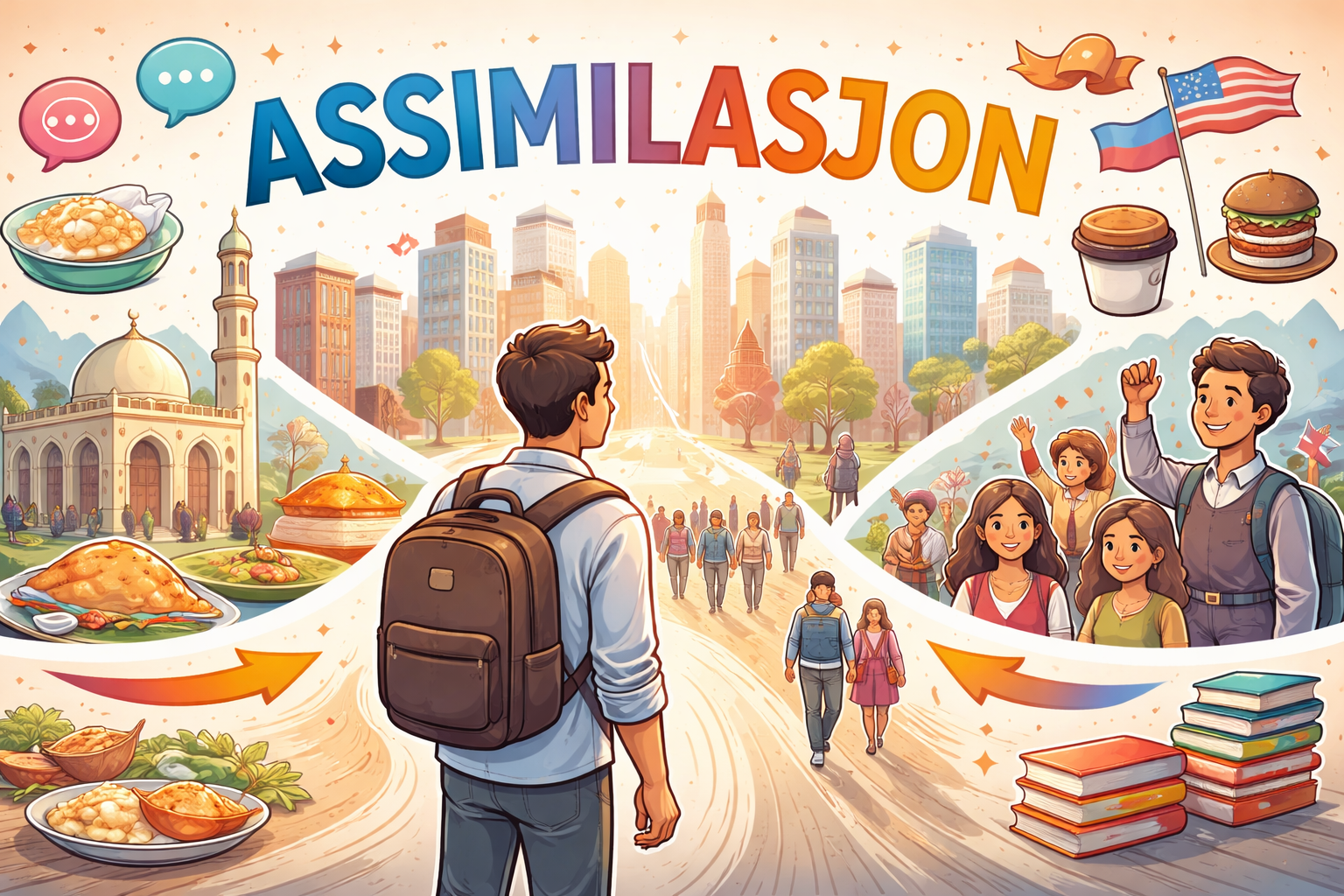
I didn’t really “get” the word assimilasjon the first time I saw it.
It felt… academic. Like something from a textbook you read once and forget.
But then you start noticing it in real life.
In people. In small changes. In how someone speaks, or stops speaking a certain way.
And suddenly, the word feels different.
So what does assimilasjon actually mean?
In simple words — it’s when someone slowly becomes more like the society around them.
Not in one big step. Not overnight.
More like… piece by piece.
A person moves somewhere new. New country, new city, even a new environment. At first, everything feels off. Language, behavior, jokes, even silence feels different.
Then slowly…
Things shift.
They start using new words.
They pick up habits.
They stop explaining themselves as much.
And one day, they realize — they’ve changed.
That’s assimilasjon.
It doesn’t happen the way people think
Most people imagine it like a clear process.
But it’s not.
There’s no checklist like:
- Learn language ✔
- Change habits ✔
- Done ✔
It’s messier than that.
Some things change fast. Others don’t.
And some things… you don’t even notice changing until later.
Like:
- You stop translating in your head
- You laugh at jokes you didn’t understand before
- You respond differently in conversations
- You feel slightly out of place in your old environment
That last one hits differently.
A quick example (real-life kind)
Think about a kid who moves to a new country.
At school, they try to fit in. At first, they’re quiet. Observing. Copying others.
Then:
- They start speaking like their classmates
- They prefer local food over what they used to eat
- They celebrate new holidays
- They act differently at school vs at home
After a few years… they’re almost fully part of that culture.
But not completely.
There’s always something in between.
Different types — but honestly, they overlap
People like to divide assimilasjon into categories. And yeah, it helps a bit.
Here’s a simple version:
| Type | What it looks like |
|---|---|
| Cultural | Changing language, food, clothing |
| Social | Making friends, blending into groups |
| Structural | Working, studying in the main system |
| Forced | Being pushed to give up identity |
| Voluntary | Choosing to adapt |
But in real life? These mix together.
Nothing is perfectly labeled.
The part people don’t talk about much
Assimilasjon isn’t always “good” or “bad.”
It depends.
Sometimes it makes life easier.
You understand people better. You feel included. Opportunities open up.
But… there’s another side.
And it’s quieter.
- You forget certain words from your first language
- You don’t follow old traditions the same way
- You feel slightly disconnected from your roots
- You don’t fully belong in either place
That in-between feeling… yeah, that’s real.
Assimilasjon vs just adapting
People confuse this a lot.
Adapting (or integration) means:
You adjust, but you stay yourself.
Assimilasjon means:
You adjust so much that parts of your original identity start fading.
Not always completely gone.
But less visible. Less active.
Why do people assimilate?
Not always for the same reason.
Sometimes it’s a choice:
- “I want to fit in”
- “I want better opportunities”
Sometimes it’s pressure:
- “People won’t accept me otherwise”
- “I need to change to succeed here”
And sometimes… it just happens without thinking.
Daily life does it.
Common situations where you see it
You’ve probably seen assimilasjon more than you think:
- Someone changing their accent over time
- Kids speaking a different language than their parents
- People dressing or behaving like the dominant culture
- Someone avoiding their original culture in public
Small things. But they add up.
The world is changing though
Here’s the interesting part.
Before, many societies expected people to fully assimilate.
Like — “become like us.”
Now? It’s shifting.
More people talk about diversity, identity, balance.
You can adapt and keep your culture. At least, that’s the idea now.
Not perfect everywhere… but it’s improving.
Final thought (not a perfect ending)
Assimilasjon isn’t just a concept. It’s something people live through.
Sometimes it feels natural.
Sometimes uncomfortable.
Sometimes you don’t even realize it’s happening until much later.
And maybe that’s what makes it complicated.
Because it’s not just about changing…
…it’s about what stays, what fades, and what you’re willing to let go.