 By Admin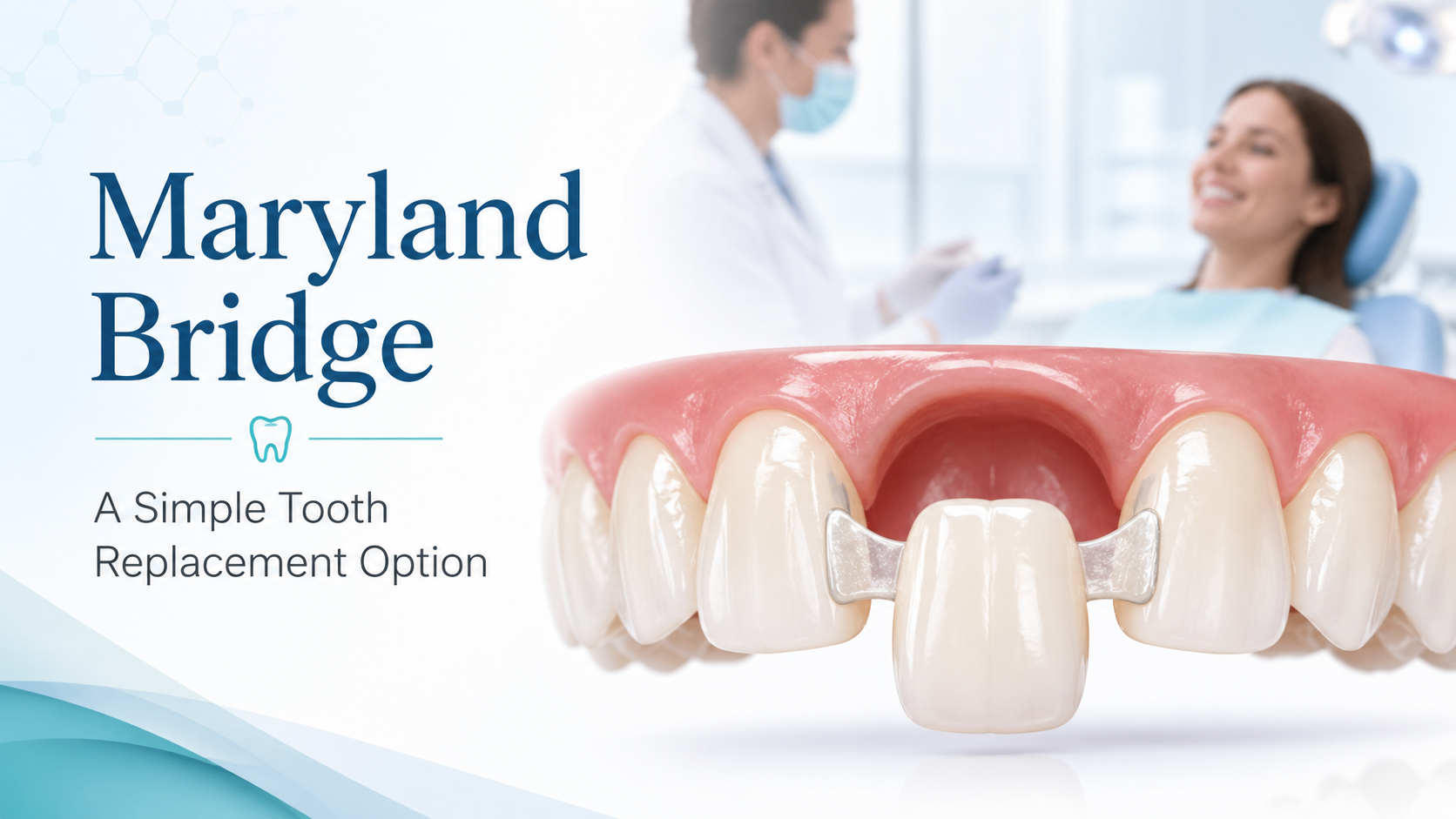
Losing a tooth feels… strange. Not just the gap, but chewing, smiling, even speaking changes a bit. And that’s where a Maryland bridge quietly steps in — a simple, less invasive way to fix that space without heavy dental work.
Let’s break it down in a clear, real-world way so you actually understand what it is, how it works, and whether it’s worth it.
What Is a Maryland Bridge?
A Maryland bridge is a type of dental bridge used to replace a missing tooth, usually in the front of the mouth. It’s also called a resin-bonded bridge.
Instead of using crowns like traditional bridges, it uses small “wings” attached to nearby teeth.
- One artificial tooth (called a pontic)
- Two thin wings (metal or porcelain)
- Bonded to the back of nearby teeth
So… no drilling down healthy teeth. That’s a big deal.
How Does a Maryland Bridge Work?
It’s actually pretty straightforward.
A dentist creates a custom artificial tooth that matches your natural teeth. Then:
- The bridge is positioned in the gap
- The wings are bonded behind the adjacent teeth
- Strong dental cement keeps everything in place
No surgery. No major cutting.
And yeah — that’s why many people prefer it.
Why People Choose a Maryland Bridge
There’s a reason this option is popular, especially for front teeth.
Here’s what makes it attractive:
- Minimal damage to natural teeth
- Quick procedure (often 1–2 visits)
- No surgery required
- Natural appearance (wings are hidden)
- Lower cost compared to implants
And honestly… it feels like a “lighter” solution compared to other dental treatments.
When Is a Maryland Bridge Used?
This is important — it’s not for everyone.
Dentists usually recommend it when:
- You’re missing one tooth
- The gap is in the front (visible area)
- Nearby teeth are healthy and strong
- You want a non-surgical option
It’s often used for cosmetic fixes rather than heavy chewing areas.
Types of Dental Bridges (Quick Overview)
Before choosing, it helps to see where Maryland bridges stand.
| Type of Bridge | How It Works | Best For | Invasiveness |
|---|---|---|---|
| Maryland Bridge | Bonded wings to nearby teeth | Front teeth | Low |
| Traditional Bridge | Crowns on adjacent teeth | Back & front teeth | Medium |
| Implant Bridge | Attached to implants in jaw | Multiple missing teeth | High |
Each has its place — no one-size-fits-all here.
Benefits of a Maryland Bridge
Let’s keep it real. Here’s why people go for it:
- Conservative treatment
Keeps your natural teeth mostly untouched - Fast results
No long healing time like implants - Affordable option
Costs less than implants or complex bridges - Good aesthetics
Looks natural when done properly - Reversible in some cases
Since teeth aren’t heavily altered
Limitations You Should Know
But… it’s not perfect. And you shouldn’t treat it like one.
- Not very strong
Can loosen over time - Not for back teeth
Can’t handle strong chewing pressure - Shorter lifespan
Usually lasts 5–10 years - Depends on nearby teeth
Weak teeth = poor support - May come loose
Especially if you bite hard foods
So yeah… it’s more of a medium-term solution.
Maryland Bridge vs Dental Implant
This is where most people get confused.
Let’s simplify it:
| Feature | Maryland Bridge | Dental Implant |
|---|---|---|
| Surgery | No | Yes |
| Cost | Lower | Higher |
| Lifespan | 5–10 years | 15–25+ years |
| Bone health | Doesn’t prevent bone loss | Preserves bone |
| Strength | Moderate | Very strong |
Implants are stronger and long-lasting. But bridges are faster and cheaper.
So the choice depends on your situation… and budget.
Step-by-Step: Getting a Maryland Bridge
Here’s how it usually goes:
- Consultation
Dentist checks your teeth and suitability - Impressions taken
A mold of your teeth is created - Bridge creation
Lab makes a custom-fit bridge - Bonding process
Wings are attached to adjacent teeth - Final adjustments
Bite and comfort are checked
That’s it. Pretty simple compared to implants.
Cost of a Maryland Bridge
Prices vary by country and clinic, but generally:
- Around $900 to $1,600 per tooth
It’s considered one of the more affordable tooth replacement options.
Tips to Make It Last Longer
You don’t want it falling off randomly. So take care.
- Avoid biting hard foods (ice, nuts, candy)
- Maintain good oral hygiene
- Use a soft toothbrush
- Visit your dentist regularly
- Don’t use your teeth to open things (seriously…)
Simple habits… big difference.
Common Problems People Face
Just keeping it honest:
- Bridge coming loose
- Slight discomfort at first
- Food getting stuck
- Wear and tear over time
Most of these are manageable with proper care.
Future of Maryland Bridges
Dental technology keeps improving.
- Better bonding materials
- Stronger ceramics
- More natural designs
So while it’s not the strongest option today, it’s getting better year by year.
FAQs
What is a Maryland bridge used for?
It is used to replace a single missing tooth, usually in the front.
Is a Maryland bridge permanent?
It is fixed but not permanent. It may need replacement after several years.
Does it hurt to get one?
No, the procedure is usually painless and non-invasive.
Can it fall off?
Yes, in some cases it can loosen, but it can be re-bonded.
Is it better than an implant?
Depends. It’s cheaper and quicker, but implants last longer.
Final Thoughts
A Maryland bridge sits somewhere in the middle — not too complex, not too basic.
It’s ideal if you want:
- A quick fix
- Lower cost
- Minimal damage to teeth
But if you’re looking for something long-term and strong… you might want to consider implants instead.
Still, for the right person, it works really well.
And sometimes, simple is exactly what you need.