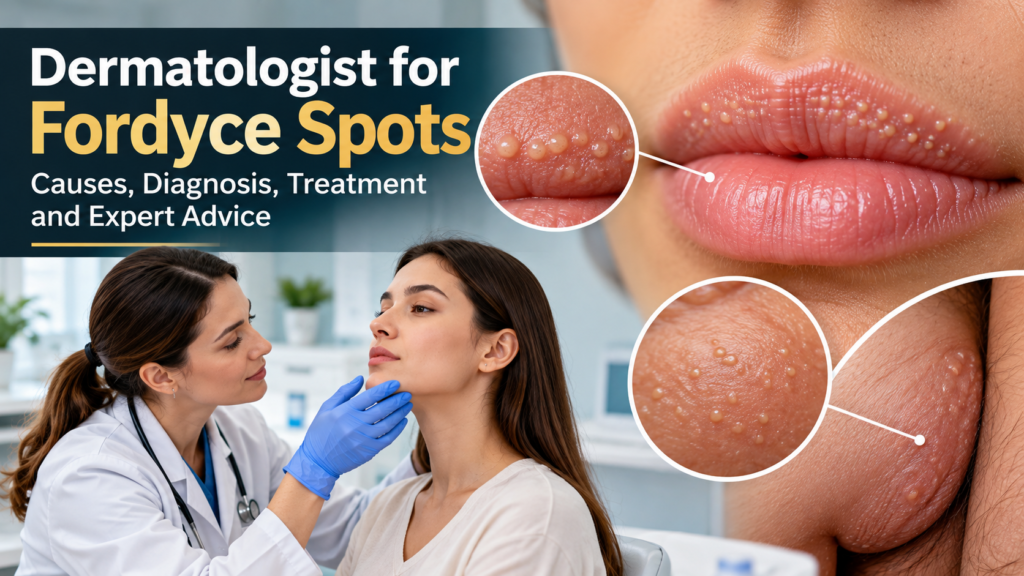
Have you ever noticed tiny white or yellowish bumps on your lips, inside your cheeks, or around your genital area? At first, they might seem unusual. You may even worry that something is wrong with your skin. But these little bumps could simply be Fordyce spots — a common and harmless skin condition.
Many people search for a dermatologist for Fordyce spots because they want to know whether these bumps are dangerous, how to remove them, and whether professional treatment is necessary.
The good news? Fordyce spots aren’t contagious, and they usually don’t cause health problems. Still, visiting a dermatologist can help you understand your skin better and explore safe treatment options if the spots bother you.
What Are Fordyce Spots?
Fordyce spots are small, visible sebaceous (oil) glands that appear on areas of the skin where oil glands aren’t normally associated with hair follicles. They commonly develop around the lips, inside the mouth, and on genital skin.
These spots are usually pale yellow, white, or skin-colored. Some people have only a few, while others notice clusters of tiny bumps.
They’re actually quite common. Many people develop more noticeable Fordyce spots during puberty because hormonal changes influence the activity of oil glands.
Here are some common characteristics:
- Small bumps measuring approximately 1–3 millimeters.
- White, yellowish, or flesh-colored appearance.
- Usually painless and non-itchy.
- Often found on the lips, cheeks, penis, scrotum, or vulva.
- May become more visible when the surrounding skin is stretched.
- Generally remain harmless over time.
And no, Fordyce spots aren’t caused by poor hygiene or sexual activity. They’re simply a natural variation in how oil glands appear on the skin.
Why Visit a Dermatologist for Fordyce Spots?
Although Fordyce spots are harmless, identifying them correctly matters. Several other skin conditions can look similar, especially when bumps appear around sensitive areas.
A dermatologist can examine the spots and determine whether they’re Fordyce spots or something else.
For example, genital warts, milia, and certain inflammatory skin conditions may sometimes resemble these small bumps.
You should consider visiting a dermatologist if:
- The bumps appeared suddenly or changed noticeably.
- You experience itching, bleeding, or discomfort.
- You’re unsure whether the spots are Fordyce spots.
- The bumps affect your confidence or appearance.
- You want to explore professional cosmetic treatments.
Sometimes, simply hearing that your skin is healthy makes a huge difference.
A dermatologist can also explain why treatment may not be necessary. After all, removing something harmless isn’t always the best decision.
What Causes Fordyce Spots?
Fordyce spots develop when sebaceous glands are located in areas where they become visible on the skin’s surface.
Unlike ordinary oil glands, which are generally connected to hair follicles, these glands aren’t associated with hair follicles.
They’re considered a normal anatomical variation rather than a disease.
Hormonal changes during puberty can make them more noticeable, but that doesn’t mean hormones are the only reason they appear.
A few important facts worth knowing:
- Fordyce spots aren’t bacterial infections.
- They aren’t caused by viruses.
- They don’t spread through skin-to-skin contact.
- They aren’t classified as sexually transmitted infections.
- They usually don’t require medical treatment.
Some people naturally have more visible spots than others. That’s normal, too.
How Does a Dermatologist Diagnose Fordyce Spots?
Diagnosing Fordyce spots is usually straightforward for an experienced dermatologist.
During your appointment, the doctor will examine the affected area and ask a few questions about your symptoms.
They may ask when the bumps first appeared, whether they’ve changed, and whether you experience pain or irritation.
In most cases, a visual examination is enough.
However, if the appearance is unusual, your dermatologist might recommend additional testing to rule out other conditions.
Fordyce Spots vs. Other Skin Conditions
| Skin condition | Appearance | Main difference |
|---|---|---|
| Fordyce spots | Small white or yellow bumps | Harmless, visible oil glands |
| Milia | Tiny, firm white bumps | Keratin-filled cysts |
| Genital warts | Flesh-colored, sometimes rough bumps | Caused by HPV |
| Genital herpes | Blisters or painful sores | Viral infection |
| Acne | Red bumps, whiteheads, or pimples | Often involves clogged follicles and inflammation |
These descriptions aren’t enough for self-diagnosis. A professional examination is important when the cause of a skin change is uncertain.
Best Treatment Options for Fordyce Spots
Here’s something many people don’t expect: Fordyce spots usually don’t need treatment.
Because they’re harmless, dermatologists often recommend leaving them alone.
But if their appearance bothers you, some cosmetic procedures may help make them less noticeable.
1. Laser Treatment
Laser treatment is one option dermatologists may consider for reducing visible Fordyce spots.
Carbon dioxide (CO₂) lasers can target and remove small areas of tissue.
The procedure may improve the appearance of the affected area, although results vary.
Possible side effects include:
- Temporary redness.
- Skin irritation.
- Pigmentation changes.
- Scarring.
- Healing discomfort.
Laser treatment should only be performed by an appropriately trained medical professional.
2. Electrosurgery
Electrosurgery uses electrical energy to remove or destroy targeted tissue.
A dermatologist may consider this technique for selected Fordyce spots.
Although it can reduce their appearance, it may also cause irritation, discoloration, or scarring.
That’s why discussing the benefits and risks beforehand is important.
3. Micro-Punch Surgery
Micro-punch surgery involves using a small surgical instrument to remove individual lesions.
It may be considered in certain cosmetic cases, particularly when the spots are prominent.
However, this technique is invasive and may leave small scars.
Not everyone is a suitable candidate.
4. Topical Prescription Treatments
Some dermatologists may discuss topical retinoids, such as tretinoin, for selected patients.
These products influence skin-cell turnover, but evidence for treating Fordyce spots is limited.
They can also cause irritation, particularly around sensitive areas.
Never apply prescription-strength skincare products to your lips or genital skin without professional guidance.
Comparison of Fordyce Spots Treatment Options
| Treatment | Purpose | Possible drawbacks |
|---|---|---|
| No treatment | Avoid unnecessary procedures | Spots remain visible |
| Laser therapy | Reduce spot visibility | Scarring or pigmentation changes |
| Electrosurgery | Remove targeted tissue | Irritation and healing time |
| Micro-punch surgery | Remove individual spots | Invasive, possible scars |
| Topical retinoids | Potential cosmetic improvement | Irritation and uncertain effectiveness |
The right approach depends on the location of the spots, your skin type, and your expectations.
Can You Remove Fordyce Spots Naturally?
A quick internet search will probably show dozens of home remedies for Fordyce spots.
Some websites suggest coconut oil, apple cider vinegar, or essential oils.
But there’s little reliable scientific evidence that these remedies can remove Fordyce spots.
And applying harsh substances to delicate skin can actually make things worse.
Instead, focus on gentle skincare:
- Clean the affected skin gently.
- Avoid squeezing or scratching the bumps.
- Don’t use harsh exfoliating products.
- Avoid unapproved chemical treatments.
- Consult a dermatologist before trying medicated creams.
Remember, Fordyce spots aren’t clogged pores that need to be squeezed out.
Trying to remove them yourself could lead to inflammation or permanent scarring.
How Much Does a Dermatologist for Fordyce Spots Cost?
The cost of seeing a dermatologist depends on your location, clinic, and the type of treatment you choose.
A basic consultation generally costs less than cosmetic procedures such as laser treatment.
Prices may also depend on the number of spots, the size of the treatment area, and whether multiple sessions are required.
Because Fordyce spots are medically harmless, cosmetic removal may not be covered by health insurance.
Before scheduling treatment, ask the clinic about consultation fees, procedure costs, possible follow-up visits, and expected recovery time.
When Should You Worry About Fordyce Spots?
Typical Fordyce spots aren’t dangerous and don’t turn into cancer.
However, not every small bump is a Fordyce spot.
You should seek medical advice if you notice:
- Painful or rapidly growing bumps.
- Persistent bleeding or open sores.
- Unusual swelling or inflammation.
- Blisters or genital discharge.
- Significant changes in color or shape.
These symptoms may indicate another skin condition that requires evaluation.
Getting checked early can prevent unnecessary worry and help identify problems that need treatment.
Final Thoughts
Finding a qualified dermatologist for Fordyce spots is a sensible step if you’re unsure about unusual bumps or want professional advice about cosmetic treatment.
Fordyce spots are generally harmless, common, and completely unrelated to poor hygiene. Most people don’t need any treatment at all.
But if their appearance affects your confidence, a dermatologist can explain available options, including laser procedures and other targeted treatments.
Just remember — safe skin care matters more than quick fixes. Avoid aggressive home remedies, ask questions during your consultation, and choose treatments based on professional guidance rather than online promises.
Sometimes the best treatment is simply understanding that your skin is normal.
Disclaimer: This article is for educational purposes only and doesn’t replace medical advice, diagnosis, or treatment from a qualified healthcare professional.