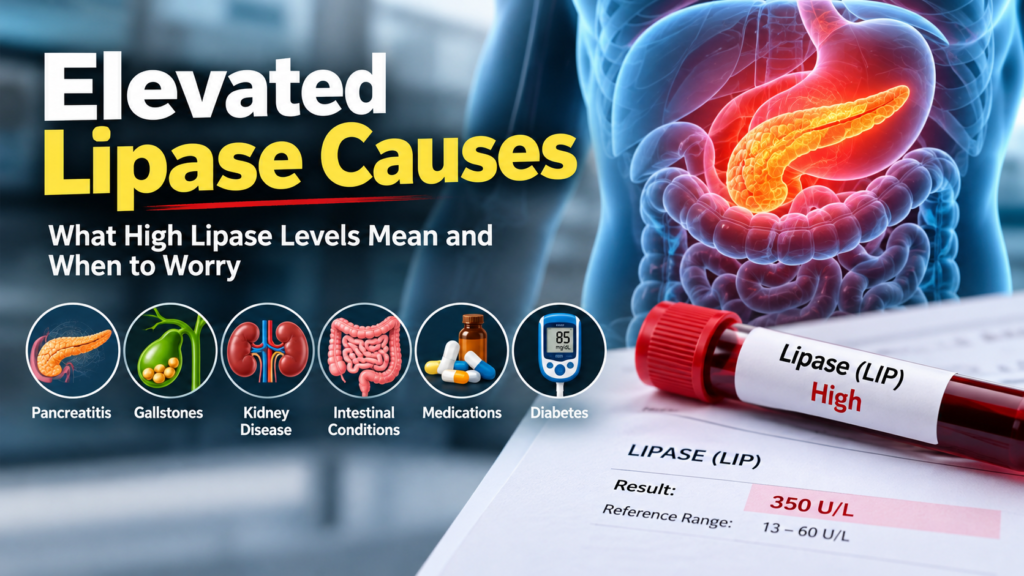
Getting blood test results that show elevated lipase can be worrying, especially when you’re not sure what the numbers mean. Is it a sign of a pancreatic problem? Could medication be responsible? Or can lipase levels rise for other reasons?
The answer depends on several factors, including how high the level is, whether you have symptoms, and what other test results show.
Understanding elevated lipase causes can help you make sense of your results and know when to seek medical attention. A high reading doesn’t automatically mean something serious is happening, but it shouldn’t be ignored either.
What Is Lipase, and Why Does It Matter?
Lipase is a digestive enzyme produced mainly by the pancreas. Its job is to help your body break down fats from food so they can be absorbed properly.
Normally, only a small amount of lipase circulates in the bloodstream. When pancreatic cells become irritated or injured, more of this enzyme may enter the blood. That’s why doctors often order a lipase blood test when someone has abdominal pain, nausea, or other symptoms that might point to a pancreatic condition.
According to MedlinePlus, elevated lipase may be associated with pancreatic disease, kidney problems, gallbladder disease, and certain intestinal conditions.
But there’s an important detail: one abnormal result cannot tell the whole story. Doctors interpret lipase levels alongside symptoms, medical history, and sometimes imaging tests.
Common Elevated Lipase Causes
Several health conditions and medications can cause lipase levels to rise. Some involve the pancreas directly, while others affect how the body processes or clears the enzyme.
1. Acute Pancreatitis
Acute pancreatitis is one of the best-known causes of elevated lipase. It happens when the pancreas becomes suddenly inflamed, sometimes causing significant abdominal pain and digestive symptoms.
Common symptoms include:
- Pain in the upper abdomen that may spread to the back.
- Nausea and repeated vomiting.
- Abdominal tenderness or swelling.
- Fever or a rapid heartbeat in some cases.
Lipase levels can rise considerably during an acute episode. Doctors commonly consider a level at least three times the laboratory’s upper reference limit alongside characteristic pain or imaging findings when diagnosing acute pancreatitis.
The condition can range from mild to life-threatening, so severe or persistent symptoms need urgent medical evaluation.
2. Gallstones and Bile Duct Problems
Gallstones are another important cause. A stone can block the pancreatic duct or interfere with the flow of digestive fluids, triggering inflammation in the pancreas.
Some people experience pain in the upper-right abdomen, particularly after meals. Others develop nausea, vomiting, or pain that spreads toward the back.
Gallbladder disease doesn’t always cause elevated lipase, but when a stone affects the pancreatic duct, the enzyme level may increase significantly.
3. Chronic Pancreatitis
Unlike acute pancreatitis, chronic pancreatitis involves long-term inflammation and damage to the pancreas. Repeated episodes of inflammation may gradually interfere with digestion and the organ’s normal function.
Possible symptoms include:
- Recurring upper abdominal pain.
- Unintentional weight loss.
- Oily, difficult-to-flush stools.
- Digestive difficulties after eating.
Lipase may be elevated during certain episodes. However, people with advanced chronic pancreatic damage can sometimes have normal or even low enzyme levels because fewer healthy cells remain to produce them.
4. Kidney Disease
Your kidneys help filter and clear different substances from the bloodstream, including lipase. When kidney function declines, lipase may accumulate in the blood.
This means a person with chronic kidney disease can have elevated lipase without having acute pancreatitis.
Doctors may consider kidney function tests, such as creatinine and estimated glomerular filtration rate (eGFR), when interpreting an abnormal result.
5. Intestinal Conditions
Not every cause of high lipase starts in the pancreas. Certain abdominal and intestinal problems can also raise the level.
These may include:
- Intestinal obstruction, which prevents normal movement through the bowel.
- A perforated peptic ulcer.
- Intestinal inflammation or injury.
- Other serious abdominal conditions.
Some of these problems can resemble pancreatitis because they also cause abdominal pain, nausea, and vomiting. That’s one reason doctors look at the complete clinical picture rather than relying on a single blood test.
6. Certain Medications
Some medicines can affect lipase levels or, less commonly, contribute to pancreatitis. The specific risk depends on the medication, dose, and individual circumstances.
Medicines that may be associated with changes in lipase include certain:
- Opioid pain medicines, including codeine.
- Diuretics, sometimes called water pills.
- Cholesterol-lowering medicines.
- Hormonal medications.
- Other prescription drugs associated with pancreatic inflammation.
This doesn’t mean you should stop taking a prescribed medicine if your result is high. Instead, give your healthcare professional a complete list of your medicines and supplements so they can assess whether any might be contributing.
7. Diabetes and Diabetic Ketoacidosis
Diabetes can sometimes be associated with elevated lipase. A particularly important situation is diabetic ketoacidosis (DKA), a serious complication in which the body produces excessive blood acids called ketones.
DKA may occur with high blood glucose, dehydration, nausea, vomiting, and abdominal pain. Lipase can rise during DKA, even when acute pancreatitis isn’t the primary problem.
Severe thirst, frequent urination, vomiting, deep or rapid breathing, confusion, or unusual drowsiness require emergency medical attention, particularly in someone with diabetes.
8. Pancreatic Duct Blockage or Other Pancreatic Disease
A blocked pancreatic duct can interfere with the normal movement of digestive enzymes. Depending on the cause, this may lead to inflammation and elevated blood lipase.
Other pancreatic conditions, including pancreatic cysts and, less commonly, pancreatic cancer, can also be associated with abnormal levels.
However, an elevated lipase result alone does not mean a person has cancer. Persistent unexplained abnormalities, ongoing abdominal pain, unexplained weight loss, or jaundice deserve proper medical assessment.
Quick Comparison: Elevated Lipase Causes and Possible Clues
| Possible cause | Signs or clues | What doctors may check |
|---|---|---|
| Acute pancreatitis | Severe upper abdominal pain, vomiting | Lipase, other blood tests, imaging when needed |
| Gallstones | Upper abdominal pain, sometimes jaundice | Liver tests, abdominal ultrasound |
| Chronic pancreatitis | Recurrent pain, weight loss, greasy stools | Medical history, pancreatic imaging, digestive tests |
| Kidney disease | Known kidney problems, sometimes few symptoms | Creatinine, eGFR, other kidney tests |
| Intestinal conditions | Pain, bloating, vomiting, bowel changes | Examination, blood tests, imaging |
| Medication effects | Recent medicine changes or relevant drug history | Medication review and repeat testing if appropriate |
| Diabetic ketoacidosis | Vomiting, dehydration, rapid breathing, high glucose or ketones | Blood glucose, ketones, electrolytes, acid-base tests |
These clues are not diagnostic on their own. Several conditions can produce similar symptoms, and the appropriate tests depend on the individual case.
What Lipase Level Is Considered High?
There isn’t one universal normal range for every laboratory. Reference ranges vary according to the testing method, so the range printed on your report is the best starting point.
For example, some laboratories use a reference interval around 13–60 units per liter (U/L), while others use different limits.
A result above the reference range is considered elevated, but the degree of elevation matters.
- Slightly elevated: May occur with several medical conditions, medication effects, or occasionally without a clear explanation.
- Moderately elevated: Needs interpretation alongside symptoms and other laboratory findings.
- Three times the upper limit of normal or higher: Can support a diagnosis of acute pancreatitis when accompanied by characteristic abdominal pain or compatible imaging findings.
Higher numbers don’t necessarily mean more severe pancreatic damage. The result must be interpreted in context, not as a stand-alone measure of disease severity.
How Do Doctors Find the Cause of Elevated Lipase?
The next step depends on your symptoms, medical history, and the actual test result. Your healthcare professional may recommend:
- Repeat or additional blood tests: To assess lipase, kidney function, blood glucose, electrolytes, and liver function.
- Amylase testing: Another digestive enzyme that may provide useful information in selected cases.
- Abdominal ultrasound: Particularly useful when gallstones are suspected.
- CT or MRI imaging: Considered when the diagnosis is uncertain or further evaluation is needed.
- Medication review: To identify possible drug-related effects.
Not everyone needs every test. For someone who feels well and has only a small elevation, the evaluation may be quite different from that of someone with severe abdominal pain.
Can You Lower Elevated Lipase Naturally?
The right approach is to treat the underlying cause rather than trying to lower the number by itself.
Depending on the diagnosis, helpful steps may include:
- Avoiding alcohol if pancreatitis is suspected or diagnosed.
- Staying hydrated when appropriate and following medical advice.
- Managing diabetes with a clinician’s guidance.
- Following a recommended eating plan during recovery.
- Taking prescribed medicines as directed and discussing possible side effects.
- Attending follow-up appointments and completing recommended tests.
Don’t rely on detox drinks, herbal remedies, or supplements to correct an unexplained result. Some products can interact with medication or delay necessary treatment.
If acute pancreatitis is suspected, medical assessment takes priority over home treatment.
When Should You Seek Medical Attention?
A high lipase result deserves prompt follow-up, especially if you have new or persistent symptoms.
Seek emergency medical care for severe or persistent upper abdominal pain, repeated vomiting, fainting, confusion, difficulty breathing, or abdominal pain accompanied by fever or jaundice. These symptoms can indicate a serious condition that needs immediate assessment.
If your lipase is elevated but you feel well, contact your healthcare professional to discuss the result and determine whether further testing or monitoring is appropriate.
Final Thoughts
There are several possible elevated lipase causes, ranging from pancreatitis and gallstones to kidney disease, intestinal problems, diabetes-related complications, and medication effects.
The key is to avoid jumping to conclusions. A mildly abnormal result doesn’t automatically indicate a dangerous illness, and even a very high result needs to be interpreted alongside symptoms and other findings.
If your blood test shows elevated lipase, discuss the exact number and laboratory reference range with your healthcare professional. Finding the reason behind the result is far more useful than focusing on the number alone.
Medical disclaimer: This article is for educational purposes only and is not a substitute for professional medical advice, diagnosis, or treatment.