 By Admin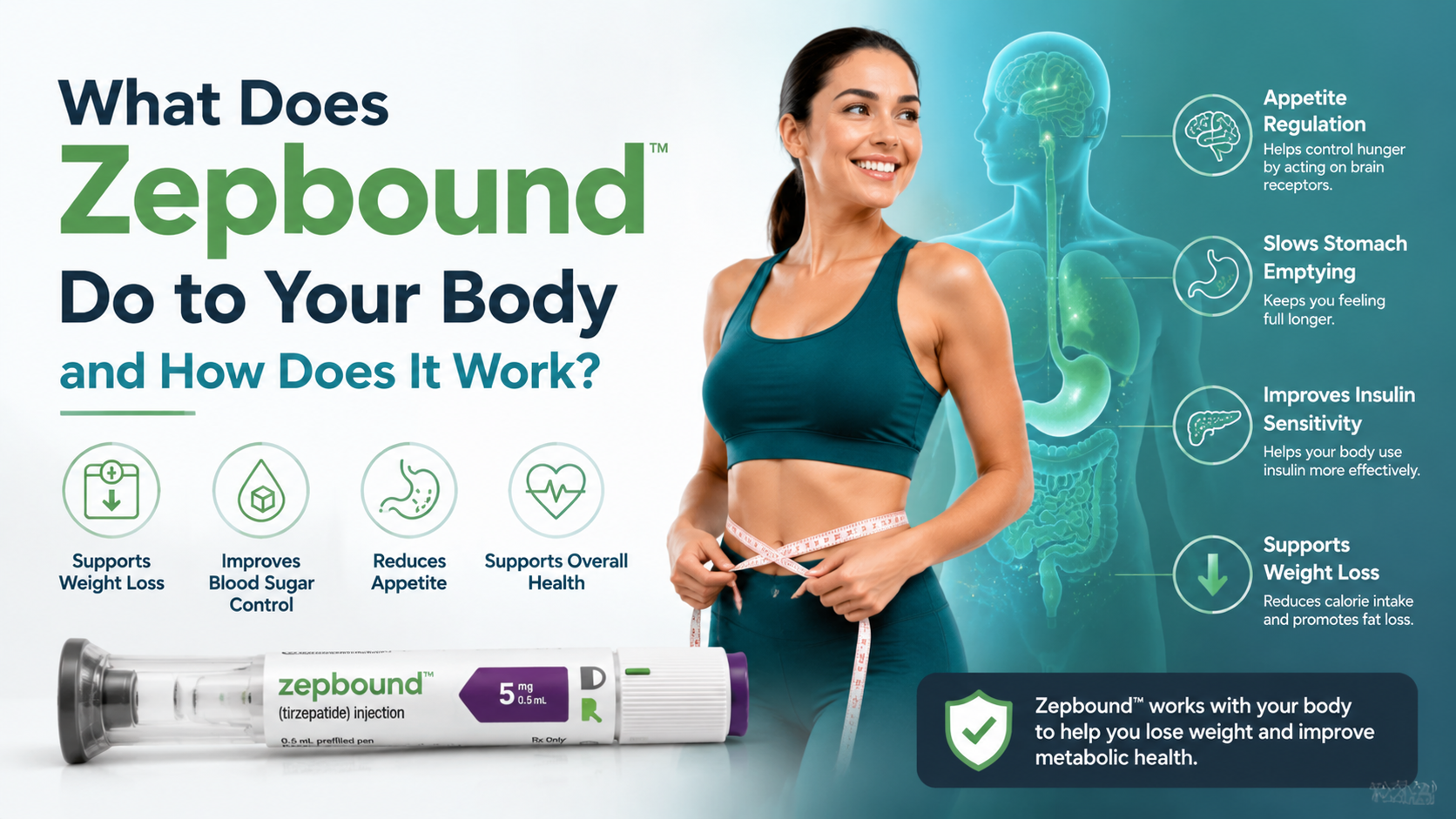
If you are exploring medical weight loss options, one of the most important questions is what does Zepbound do to your body and why it leads to noticeable changes in appetite, eating behavior, and weight. Unlike traditional dieting methods, Zepbound works through biological hormone pathways that directly influence hunger and digestion.
This is where structured medical support matters. FitRx helps individuals understand how treatments like Zepbound fit into a complete weight management journey that includes monitoring, consistency, and lifestyle awareness. The goal is not only eating less but also building a healthier response to food over time.
This article explains how Zepbound works inside the body, what changes occur, and what Zepbound effects you can expect during treatment.
How Zepbound Works Inside the Body
Zepbound (tirzepatide) is designed to act on hormones that control appetite and blood sugar regulation. It influences two major pathways that affect fullness and energy use.
When Zepbound enters the body, it sends signals to the brain that reduce hunger perception. At the same time, it slows down how quickly the stomach empties, which helps you feel full for longer after meals.
With guidance from FitRx, many individuals better understand these changes and learn how to align daily eating habits with how their body is responding. This combination often makes portion control feel more natural rather than forced.
What Does Zepbound Do to Your Body Over Time?
When asking what does Zepbound do to your body, the most immediate change is a noticeable reduction in appetite. Meals feel more satisfying, and hunger between meals becomes less frequent.
Over time, eating behavior begins to shift naturally. Food stops dominating daily thoughts, and cravings for high-calorie items gradually decrease. These changes come from how Zepbound interacts with brain pathways linked to hunger and reward.
With consistent use of FitRx, individuals can track these shifts in real time, making it easier to understand progress and stay consistent without confusion or guesswork.
Zepbound Effects on Appetite and Digestion
One of the key Zepbound effects is stronger appetite control. Fullness lasts longer after eating, and hunger signals become easier to manage throughout the day.
Digestion also slows, which keeps food in the stomach longer. This supports satiety but may create early adjustment sensations such as mild nausea or heaviness after meals.
Through structured tracking with FitRx, users can monitor how their body responds and adjust meal timing and portions for better comfort and smoother adaptation.
Zepbound Weight Loss and Metabolic Changes
The term Zepbound weight loss refers to gradual fat reduction caused by lower calorie intake and improved metabolic function. Zepbound improves insulin sensitivity, which helps regulate blood sugar more efficiently.
This metabolic shift encourages the body to use stored fat for energy instead of storing excess calories. The result is steady and controlled weight loss over time.
With ongoing support from FitRx, individuals are able to track patterns, maintain consistency, and better understand how medication and lifestyle work together for long-term progress.
Physical Changes and Early Body Responses
During early treatment, the body begins adapting to new hunger and digestion patterns. Early fullness after meals becomes common, along with reduced interest in frequent snacking.
Some individuals may experience mild side effects of zepbound including nausea, fatigue, or bloating. These effects are temporary for most people and gradually improve as the body adjusts.
Using FitRx, users can log these early responses and recognize improvement trends, which helps build confidence during the adjustment phase.
Long-Term Changes in Eating Behavior
Over time, Zepbound reshapes eating behavior by reducing emotional eating and habitual snacking. Meals become more intentional, and portion control feels more natural.
Cravings for sugary and high-fat foods often decrease as brain reward signals stabilize. This leads to a healthier and more balanced relationship with food.
With consistent engagement through FitRx, these behavioral improvements become easier to maintain, supporting long-term success beyond initial weight loss.
Impact on Energy Levels and Daily Life
Energy levels may shift during early stages as the body adapts to reduced calorie intake. Some individuals experience mild fatigue during this period.
As adjustment continues, energy often becomes more stable throughout the day. Better blood sugar control helps reduce energy crashes and supports clearer thinking.
Many users supported by FitRx notice that daily routines become easier once hunger and cravings are no longer constantly distracting.
What Makes Zepbound Different
Zepbound works on multiple hormonal pathways rather than focusing only on appetite suppression. It influences hunger regulation and metabolic efficiency together.
This dual action leads to more consistent weight loss outcomes compared with traditional dieting approaches. It also supports long-term behavior change rather than short-term restriction.
FitRx helps users understand how these biological changes connect with daily habits, making the entire process more structured, clear, and sustainable.
Conclusion
Understanding what does Zepbound do to your body helps explain why it is effective for appetite control and weight loss. It reduces hunger, slows digestion, and improves metabolic function, leading to steady results over time.
While early side effects may occur, most individuals experience improved appetite control, reduced cravings, and more stable energy levels. With structured support from FitRx, the journey becomes easier to manage and more consistent from start to finish.
For individuals seeking long-term success, Prescription weight loss programs for lasting results by FitRx can provide the structure, support, and consistency needed to maximize the benefits of treatment and maintain sustainable progress.
FAQs
1. What does Zepbound do to your body first?
It reduces appetite and slows digestion, leading to earlier and longer fullness after meals.
2. How does Zepbound help with weight loss?
It lowers calorie intake by controlling hunger and improving metabolic efficiency.
3. What are common Zepbound effects early in treatment?
Common effects include nausea, reduced appetite, mild fatigue, and slower digestion.
4. Does Zepbound change metabolism?
Yes, it improves insulin sensitivity and helps the body use energy more effectively.
5. How does FitRx support Zepbound users?
FitRx provides structured tracking, progress monitoring, and habit support to improve consistency and results.