Let’s be honest for a second…
The topic of erectn (yeah, spelled that way on purpose) isn’t something people casually bring up over tea. It’s usually searched quietly, late at night, maybe with a bit of hesitation. And that’s exactly why it deserves a more human, less clinical conversation.
Because this isn’t just about biology.
It’s about confidence. Relationships. Stress. Aging. Lifestyle. Sometimes even identity.
So instead of a stiff, textbook-style breakdown, let’s talk about it like real people do — with clarity, a bit of honesty, and no unnecessary awkwardness.
What Does “Erectn” Really Mean?
At its simplest, erectn refers to the process where the male body responds to stimulation — physical or psychological — by increasing blood flow to certain areas. That’s the science part.
But real life? It’s rarely that simple.
Because the ability to maintain a healthy erectn depends on a mix of factors:
- Physical health
- Mental state
- Hormones
- Lifestyle habits
- Even relationship dynamics
And yeah… sometimes things just don’t work the way you expect. That’s normal. More common than most people admit.
Why This Topic Matters More Than People Think
Here’s the thing.
Many people assume issues with erectn only affect older men. But that’s not entirely true. Younger men experience it too — often due to stress, anxiety, or lifestyle habits.
And ignoring it? That can make things worse.
A healthy erectn is often a sign of overall well-being. When something feels off, it might be your body quietly signaling:
“Hey… something needs attention.”
Common Causes of Erectn Problems
There’s no single reason. It’s usually a mix — sometimes obvious, sometimes subtle.
Physical Causes
- Poor blood circulation
- High blood pressure
- Diabetes
- Hormonal imbalances
- Obesity
Psychological Causes
- Stress (big one…)
- Anxiety or performance pressure
- Depression
- Overthinking during intimacy
Lifestyle Factors
- Smoking
- Excessive alcohol use
- Lack of exercise
- Poor sleep habits
And sometimes… it’s just fatigue. You’re tired, your body’s tired, and things don’t respond the way they usually do.
A Quick Comparison Table: Causes vs Impact
| Factor Type | Example | Impact on Erectn | Reversible? |
|---|---|---|---|
| Physical | High blood pressure | Reduces blood flow | Sometimes |
| Psychological | Anxiety | Interrupts brain-body signals | Yes |
| Lifestyle | Smoking | Damages blood vessels | Yes |
| Hormonal | Low testosterone | Low energy & response | Often |
| Temporary | Stress or fatigue | Short-term disruption | Yes |
Not everything is permanent. That’s important to remember.
Signs You Shouldn’t Ignore
Sometimes it’s not about a one-time issue. That happens. No big deal.
But if you notice patterns… that’s different.
Watch for:
- Difficulty maintaining consistency
- Reduced firmness over time
- Lack of interest or energy
- Increased performance anxiety
And yeah, it might feel uncomfortable to think about — but noticing early helps a lot.
The Role of Mental Health (Underrated, Honestly)
This part gets ignored way too often.
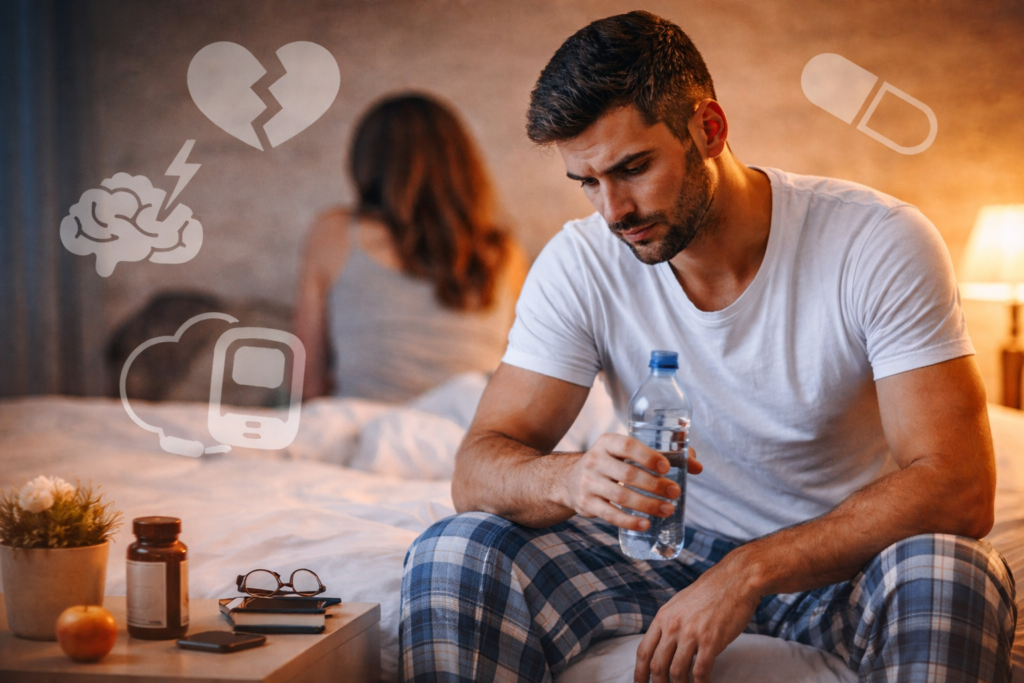
Your brain plays a huge role in erectn. If your mind is stressed, distracted, or anxious, your body might not respond properly.
It’s like trying to drive with the brakes slightly pressed… you move, but not smoothly.
Things like:
- Work pressure
- Financial stress
- Relationship tension
- Even overexposure to digital content
…can all affect performance.
And sometimes the problem isn’t physical at all.
Natural Ways to Improve Erectn
You don’t always need complicated solutions. Small changes can make a real difference.
Daily Habits That Help
- Exercise regularly — even a 20-minute walk helps
- Eat better — less processed food, more whole nutrition
- Sleep properly — seriously underrated
- Reduce stress — easier said than done, but still
- Stay hydrated
Foods That Support Better Blood Flow
- Leafy greens
- Nuts and seeds
- Fruits like watermelon and berries
- Dark chocolate (in moderation… don’t get too excited)
Quick Lifestyle Checklist
If you’re unsure where to start, just look at this:
- Are you moving your body daily?
- Drinking enough water?
- Sleeping at least 6–7 hours?
- Managing stress in any way?
- Avoiding excessive smoking or alcohol?
If most answers are “no”… well, there’s your starting point.
When Should You Consider Medical Advice?
There’s no shame in getting help. None.
If issues persist for weeks or months, it’s worth speaking to a professional. Sometimes underlying conditions need attention.
And honestly — getting clarity feels better than guessing.
Modern Solutions and Resources
Today, there are more resources than ever.
From lifestyle guidance to professional consultations, the options are wide. Some platforms even focus specifically on awareness and support.
If you’re exploring more information or practical solutions, you can check out this resource:
👉 erectn
It’s a starting point. Not magic. But helpful.
Myths That Need to Go Away
Let’s clear a few things up…
Myth 1: It only happens to older men
→ Not true. Younger men experience it too.
Myth 2: It’s always physical
→ Mental health plays a huge role.
Myth 3: It means something is seriously wrong
→ Sometimes it’s temporary. Stress, fatigue… life.
Myth 4: You should ignore it
→ Definitely not a great idea.
The Confidence Factor
This is the part people don’t say out loud.
Erectn issues can affect confidence. And once confidence drops, it can create a cycle:
- One bad experience
- Leads to anxiety
- Which leads to another issue
- And then more overthinking…
Breaking that cycle is key.
And sometimes, just understanding that it’s normal helps more than anything.

Practical Tips That Actually Work
Not perfect advice. Just real-life helpful stuff:
- Don’t overthink every moment
- Focus on connection, not performance
- Take breaks from stress when possible
- Avoid comparing yourself to unrealistic standards
- Be patient with yourself
Yeah… easier said than done. But still worth trying.
FAQs About Erectn
1. Is it normal to have occasional issues?
Yes. Completely normal. Everyone experiences it at some point.
2. Can stress alone cause problems?
Absolutely. In fact, it’s one of the most common causes.
3. Do lifestyle changes really help?
They do. Not instantly, but over time, yes.
4. Should I be worried if it happens often?
If it’s frequent, it’s worth looking into — not panicking, just checking.
5. Are online resources reliable?
Some are. Just make sure you’re using trustworthy platforms.
A Final Thought (Nothing Dramatic)
This topic… it’s more human than people admit.
It’s not just about performance or physical response. It’s about health, mindset, and how you live your daily life.
And honestly, most people dealing with erectn concerns aren’t “broken” or “failing” — they’re just… human.
Sometimes tired. Sometimes stressed. Sometimes overthinking.
And that’s okay.
What matters is paying attention, making small improvements, and not ignoring what your body is trying to tell you.
Because in the end, it’s not about perfection.
It’s about balance.